
Balance Sheet Explained for Small Business Owners (In Plain English)
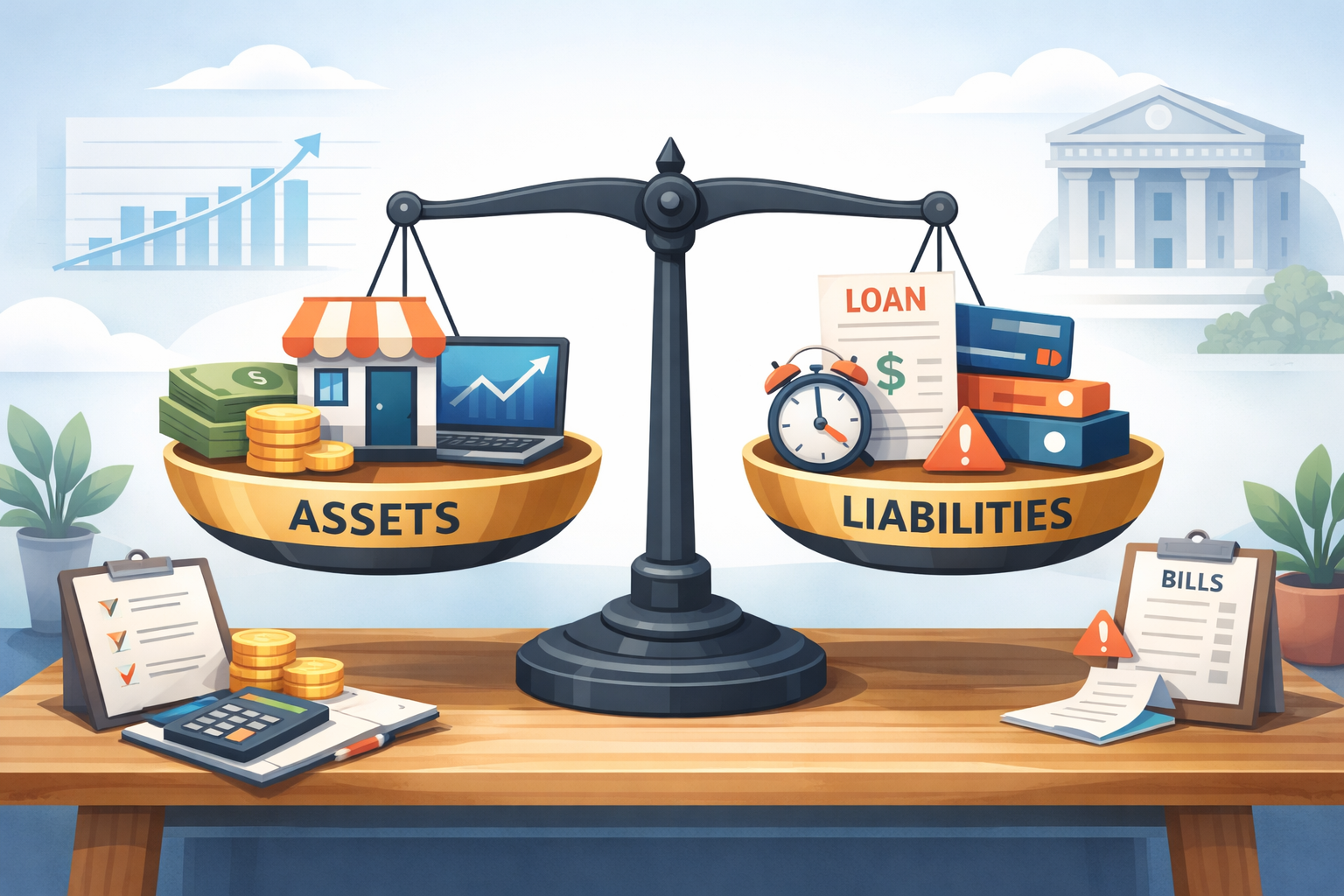
Most small business owners focus on one number: profit. It makes sense — if the business is profitable, things must be going well. But profit alone does not tell the full story, and relying on it can actually hide serious problems.
This is where the Balance Sheet becomes critical. It shows what your business owns, what it owes, and what is left for you as the owner. In simple terms, it answers one key question: “How healthy is my business right now?”
Unlike the Profit & Loss report, which shows activity over time, the Balance Sheet is a snapshot. It reflects your financial position at a specific moment, usually at the end of the month. That makes it extremely useful for spotting risks that are not visible in your income.
If you are already reviewing reports in QuickBooks or working with a bookkeeper, you already have a Balance Sheet available. The issue is that most owners do not fully understand what they are looking at, so they ignore it.
In this guide, we will break it down in plain English. You will learn what assets, liabilities, and equity actually mean, how to read your Balance Sheet quickly, and how to use it to make better decisions.
What the Balance Sheet Shows
The Balance Sheet is built on a very simple idea: everything your business owns is either funded by debt or by your own money. That relationship is always balanced, which is why it is called a “balance” sheet.
It has three main sections: assets, liabilities, and equity. Assets are what your business owns. Liabilities are what your business owes. Equity is the remaining value that belongs to you as the owner.
If your books are accurate, these three sections always connect in a predictable way. Assets equal liabilities plus equity. You do not need to memorize the formula, but you should understand the relationship.
Once you see the Balance Sheet this way, it becomes much easier to read. Instead of a confusing report, it becomes a structured picture of your business.
Fix this in your books
If you’re not sure where to start, we can help. We’ll review your current bookkeeping setup, identify any gaps or issues, and give you a clear plan to fix it — just straightforward advice.
Assets: What Your Business Owns
Assets include everything of value that belongs to your business. The most obvious one is cash, but there are several other important categories that often cause confusion.
Accounts Receivable represents money your customers owe you. If you send invoices and wait to get paid, this number can grow quickly. It looks good on paper, but it is not cash yet.
Inventory is another common asset. It represents products you purchased but have not sold yet. Again, it has value, but it does not help your cash flow until it turns into sales.
You may also see fixed assets such as equipment, vehicles, or computers. These are long-term assets that support your operations but do not convert into cash quickly.
Understanding assets is important because not all assets are equal. Cash is immediately usable, while receivables and inventory can create risk if they are not managed properly.
Liabilities: What Your Business Owes
Liabilities represent your obligations. These include credit cards, loans, unpaid bills, and taxes owed. Many business owners underestimate how important this section is.
Credit cards often appear here because they are technically short-term debt. Even if you pay them off regularly, they still represent money that was borrowed.
Loans are another major component. Whether it is an SBA loan or equipment financing, these balances remain on the Balance Sheet until they are repaid.
Accounts Payable reflects bills you have received but not yet paid. Just like receivables on the asset side, this number shows timing differences in your cash flow.
Liabilities are not inherently bad. In many cases, they help you grow. The key is understanding whether your obligations are under control or becoming a burden.
Equity: What’s Left for You
Equity is often the least understood part of the Balance Sheet. In simple terms, it represents your ownership in the business after all liabilities are accounted for.
This includes your initial investment, accumulated profits, and any withdrawals you take. Over time, equity should generally grow if the business is performing well.
However, equity can also decrease. If you consistently take more money out than the business earns, or if losses accumulate, equity will decline.
Negative equity is a warning sign. It does not necessarily mean your business is failing, but it does mean the structure needs attention.
Mini-Scenario #1: Profitable but No Cash
A small construction company shows strong profits on the P&L — about $120,000 for the year. On paper, everything looks successful. However, the owner is constantly struggling to pay bills.
Looking at the Balance Sheet reveals the issue. Accounts Receivable is $90,000, meaning most of the profit is still unpaid invoices. Inventory and materials add another $40,000 tied up in projects.
At the same time, there is a $60,000 loan and $25,000 in credit card balances. The business is profitable, but cash is locked inside assets while liabilities continue to demand payments.
This is a classic example of why profit alone is not enough. Without the Balance Sheet, the problem would remain hidden.
Mini-Scenario #2: Negative Equity Confusion
An owner sees negative equity of -$30,000 and assumes something is wrong with the business. Revenue is steady, and operations are stable, so the number does not make sense at first glance.
After reviewing the books, it becomes clear that the owner has been taking regular draws without proper tracking. Over time, these withdrawals exceeded accumulated profits.
The result is negative equity, even though the business is still operating. This is not a tax issue, but it is a structural one that should be corrected going forward.
Once the owner understands this, adjustments can be made to how money is withdrawn and recorded.
How to Read Your Balance Sheet Quickly
You do not need to analyze every line item every month. A quick structured review is enough to catch most issues early.
- Start by checking cash balances and confirming that they align with your actual bank accounts and expected liquidity position.
- Review Accounts Receivable and identify whether any invoices are significantly overdue and affecting your cash flow.
- Look at liabilities and confirm that debt levels are stable and not increasing unexpectedly month over month.
- Check equity trends and verify that it is growing or at least stable relative to your business performance.
- Scan for anything unusual, such as sudden spikes or negative balances that were not present before.
This type of review takes less than ten minutes once you are familiar with your numbers.
What to Do This Month (5-Minute Review)
Even if you are busy, you can maintain control with a short monthly routine.
- Open your Balance Sheet in QuickBooks and compare cash balances to your actual bank accounts to ensure accuracy.
- Review Accounts Receivable and follow up on any invoices that are more than 30 days overdue.
- Check your credit cards and loans to confirm that balances match expectations and payments are up to date.
- Look at inventory or large asset balances and confirm that they reflect real business activity and not outdated entries.
- Review equity and make sure your withdrawals are reasonable compared to your business performance.
This simple process prevents small issues from turning into larger problems.
Why the Balance Sheet Matters
The Balance Sheet is not just a report for bookkeepers. It is a decision-making tool. It helps you understand whether your business is stable, over-leveraged, or heading toward cash problems.
Lenders rely heavily on the Balance Sheet when evaluating loan applications. Even if your profit looks strong, weak balance metrics can limit your options.
It also helps with planning. If you want to grow, hire, or invest, the Balance Sheet shows whether you have the capacity to do so safely.
If you are unsure how to interpret your reports, professional support can make a significant difference. See our bookkeeping services or review pricing options to understand how this can be structured.
You can also explore more guides in our blog or continue with our related article: How to Read a Profit & Loss Report.
FAQ
What is equity?
Equity represents your ownership in the business. It is calculated as assets minus liabilities and reflects accumulated results and owner activity over time.
Why do credit cards appear as liabilities?
Credit cards are considered borrowed money until they are paid off. Even if used frequently, they are still obligations on your Balance Sheet.
Why don’t loans show on the P&L?
Loan balances are tracked on the Balance Sheet because they represent debt, not income or expenses. Only interest typically appears on the P&L.
What does Accounts Receivable mean?
It represents invoices you issued but have not yet been paid. It is revenue earned but not yet collected in cash.
Why does the Balance Sheet matter for loans?
Lenders review your assets, liabilities, and equity to assess risk. A strong Balance Sheet increases your chances of approval.
How often should I review it?
At minimum, once per month. Regular reviews help you catch issues early and maintain control over your business finances.