
Small businesses have long been considered the backbone of the U.S. economy. They create jobs, support local communities, and adapt more quickly to economic changes. Below is an overview of how small businesses performed in 2024–2025 and how this period compares to previous years.
Small Business Statistics in the United States
As of 2024–2025, there are more than 36 million small businesses operating in the United States, representing approximately 99.9% of all registered businesses nationwide. Over the past five years, the number of small businesses has increased by nearly 4.5 million.
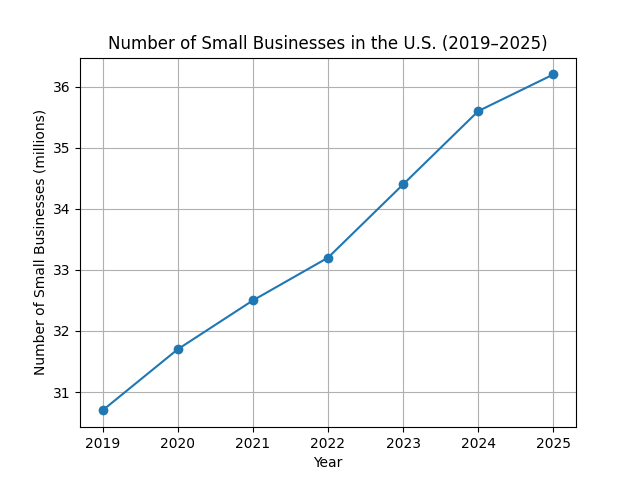
Growth in the number of small businesses in the U.S. (2019–2025)
Small Businesses and Employment
Despite their size, small businesses play a critical role in job creation. In 2024–2025, they account for approximately 45–46% of all private-sector employment, representing more than 60 million jobs across the country.
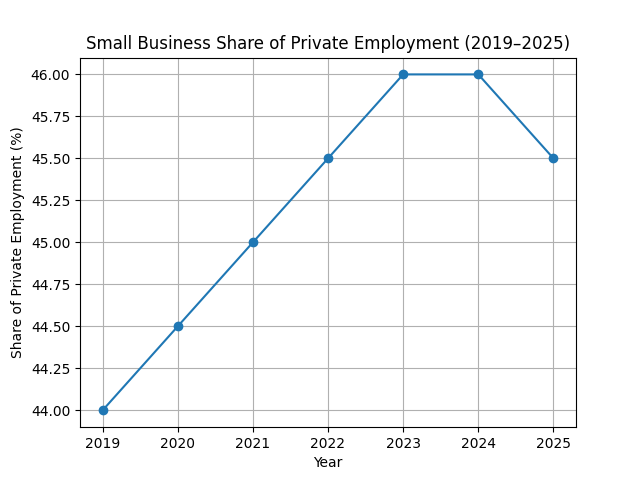
Share of private-sector employment provided by small businesses
Structure of Small Businesses
More than 80% of small businesses in the United States operate without any employees. These include sole proprietors, consultants, online service providers, and family-run businesses. Compared to 2019, the share of non-employer businesses has increased significantly.
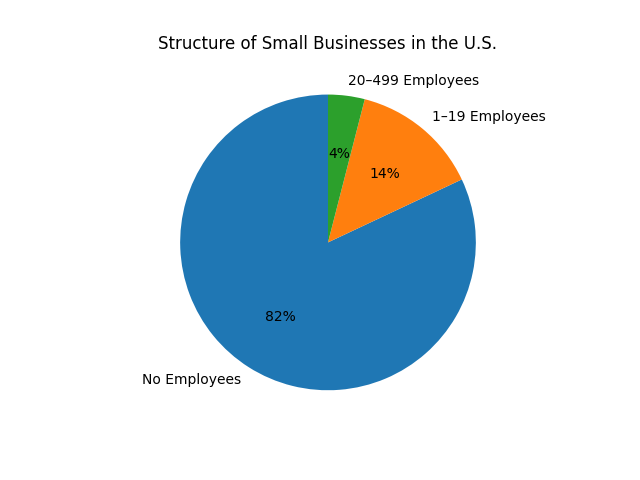
Structure of small businesses in the U.S.
Financial Performance and Challenges in 2025
While the number of small businesses continues to grow, financial pressure increased in 2025. Higher operating costs, elevated interest rates, and inflation have reduced real profitability, even for businesses that report stable or growing revenue.
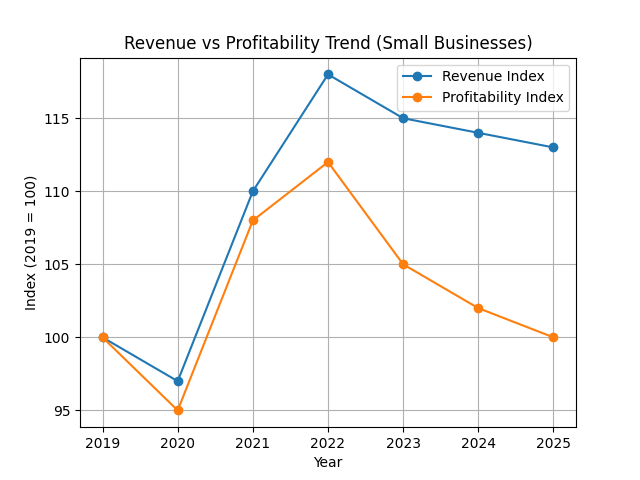
Revenue versus profitability trend (index, 2019 = 100)
How 2025 Differs from Previous Years
- greater focus on digital and remote business models;
- more data-driven decision-making;
- increased importance of ongoing financial tracking;
- higher cost of financial mistakes.
Conclusion
Small businesses in the United States continue to grow in number, but operating margins have become tighter than in previous years. In today’s economic environment, accurate and up-to-date financial information is no longer optional — it is essential for stability and long-term growth.
Related services
See how ongoing bookkeeping works. Cleanup / catch-up
Fix old months before they create bigger problems. All services
Compare bookkeeping, QuickBooks, payroll, and reporting support.