
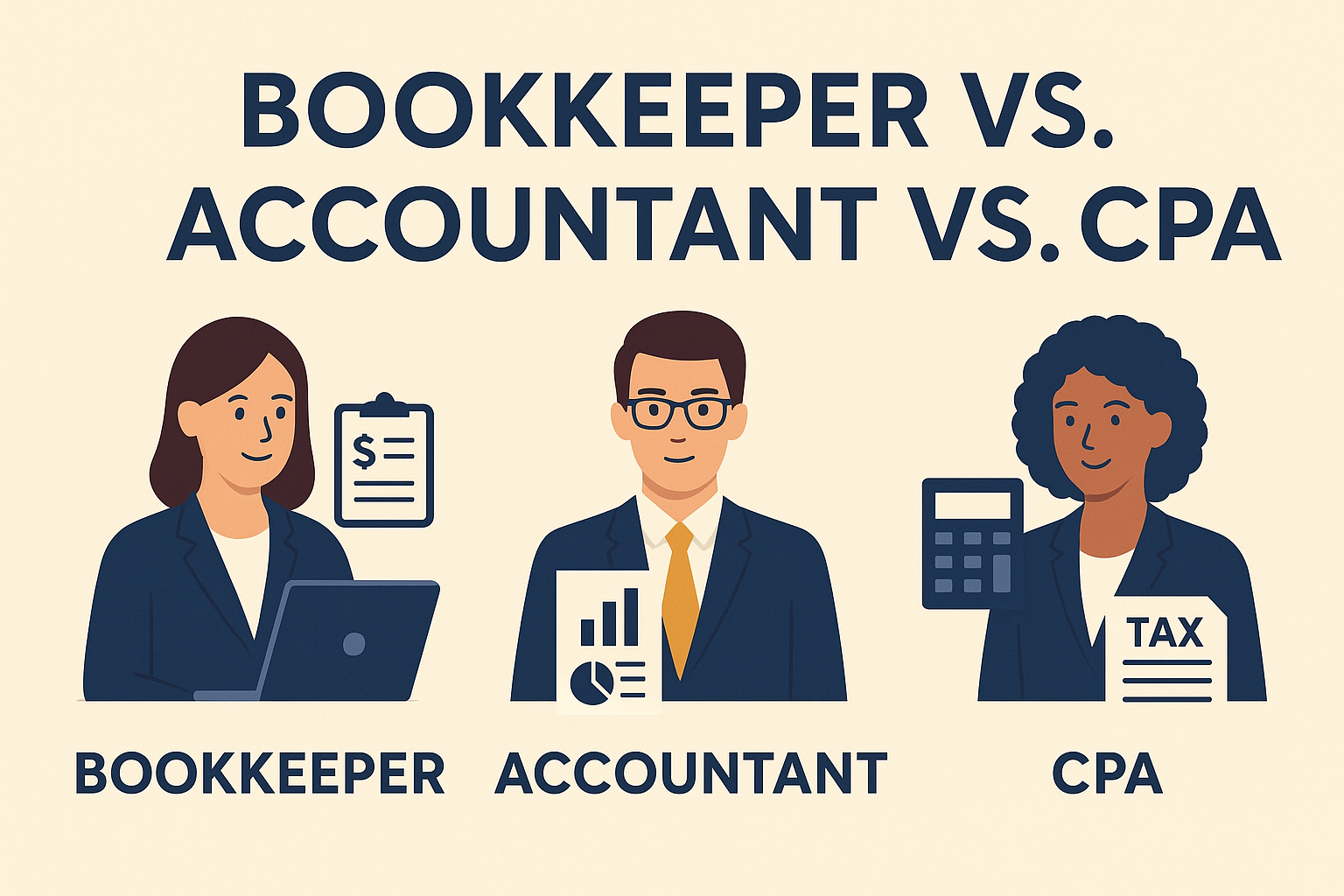
What’s the Difference and Who Does Your Business Really Need?
In the U.S. financial world, business owners often confuse the roles of a bookkeeper, an accountant, and a CPA. They all deal with money, reports, and financial data — but the scope of work, responsibility levels, and legal authority differ significantly. Understanding these differences helps small and medium-sized businesses choose the right support and avoid unnecessary expenses.
Below, we break down each role in simple terms so you can make an informed decision for your company.
What Does a Bookkeeper Do?
A bookkeeper is responsible for the daily financial operations of a business. They ensure every transaction is recorded accurately and on time. Their work forms the foundation for all further financial analysis.
Key responsibilities:
- recording income and expenses
- categorizing transactions
- creating and sending invoices
- tracking payments and overdue accounts
- reconciling bank and credit card accounts
- generating basic financial reports (P&L, Balance Sheet, Cash Flow)
- supporting small and mid-size businesses with day-to-day financial needs
A bookkeeper keeps your financial data clean, organized, and reliable — which directly affects decision-making.
Best for:
small and medium businesses, startups, entrepreneurs, service-based companies.
This is exactly what
Sunstone Ledgerprovides — accurate, efficient, and organized bookkeeping designed to support your business growth.
What Does an Accountant Do?
An accountant works on a more analytical level. They rely on the financial data prepared by the bookkeeper and turn it into insights that help a business understand performance, trends, and financial health.
Key responsibilities:
- analyzing financial data
- preparing management-level reports
- budgeting and forecasting
- recommending process improvements
- assisting with tax preparation (but not filing)
Accountants help business owners understand why the numbers look the way they do — and what to do next.
Best for:
companies that need deeper financial analysis, strategic planning, and oversight.
What Does a CPA Do?
A CPA (Certified Public Accountant) is a licensed financial professional with the legal authority to perform high-level and regulatory services.
Key responsibilities:
- preparing and signing tax returns
- conducting financial audits
- providing complex tax planning
- representing clients before the IRS
- producing official financial statements for banks, investors, and government agencies
CPA services are the most advanced — but they also cost more and are not required for the majority of daily business operations.
Best for:
businesses needing audits, tax filings, compliance work, or representation before government agencies.
Fix this in your books
If you’re not sure where to start, we can help. We’ll review your current bookkeeping setup, identify any gaps or issues, and give you a clear plan to fix it — just straightforward advice.
Which One Should You Choose?
It depends on your needs:
- Need clean books, day-to-day financial management, and accurate reports? → Hire a Bookkeeper.
- Need financial analysis, planning, and strategic insights? → Work with an Accountant.
- Need audit, tax filings, or legal representation? → Hire a CPA.
Many businesses benefit from a combination: bookkeeper → accountant → CPA only when needed.
Why Businesses Choose Bookkeeping Services Like Sunstone Ledger
Because 80% of daily financial workload doesn’t require a CPA — it requires accurate bookkeeping.
Sunstone Ledger helps business owners:
- stay organized
- understand true profitability
- make decisions based on real numbers
- avoid costly mistakes
- access transparent, easy-to-read financial reports
Quality bookkeeping is the foundation of any healthy company — and we build that foundation for you.
Related services
See how ongoing bookkeeping works. Cleanup / catch-up
Fix old months before they create bigger problems. All services
Compare bookkeeping, QuickBooks, payroll, and reporting support.